Supplement Safety Basics
Essential Guidelines for Choosing and Using Supplements Safely
SUPPLEMENTS
2/8/20264 min read
Supplement Safety Basics: Essential Guidelines for Choosing and Using Supplements Safely
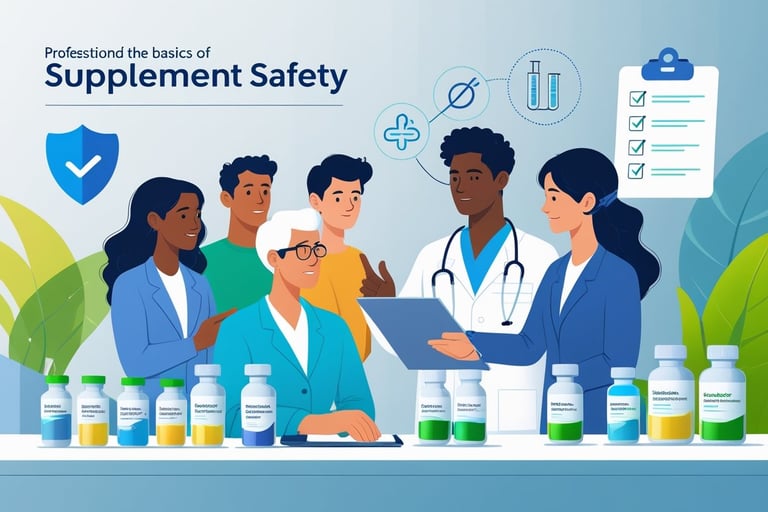
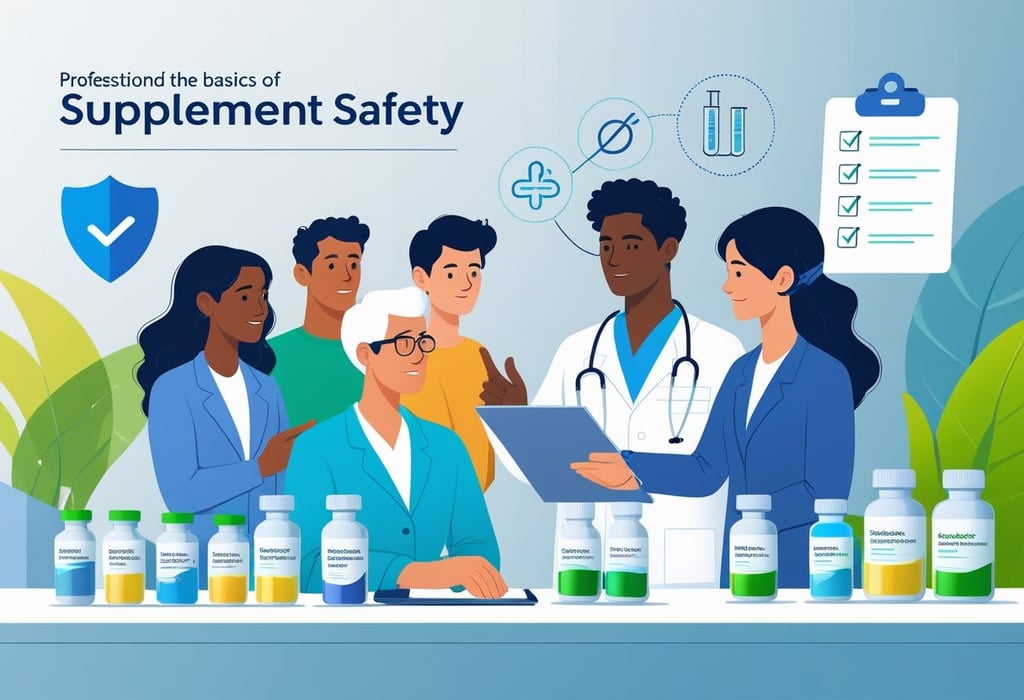
You likely take supplements to fill gaps, boost energy, or support health — but not all products are safe or effective. Check labels, verify quality, and talk with a healthcare professional before adding any supplement to your routine to reduce risks and avoid harmful interactions.
Know that regulation and quality vary widely, so learn how to spot reputable brands, read ingredient lists, and watch for red flags like proprietary blends or unrealistic claims. Small steps now protect your health and help you get the benefits you expect.
Key Takeaways
Verify supplement quality and ingredients before buying.
Consult a healthcare professional about safety and interactions.
Watch for unreliable claims and choose reputable brands.
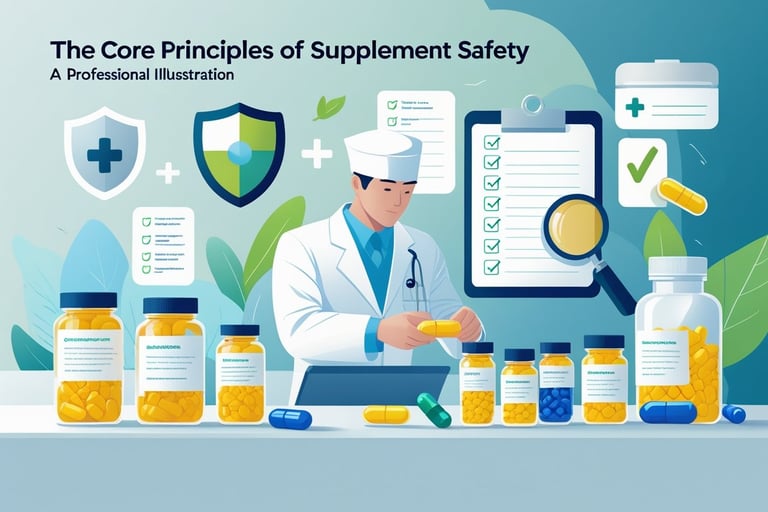
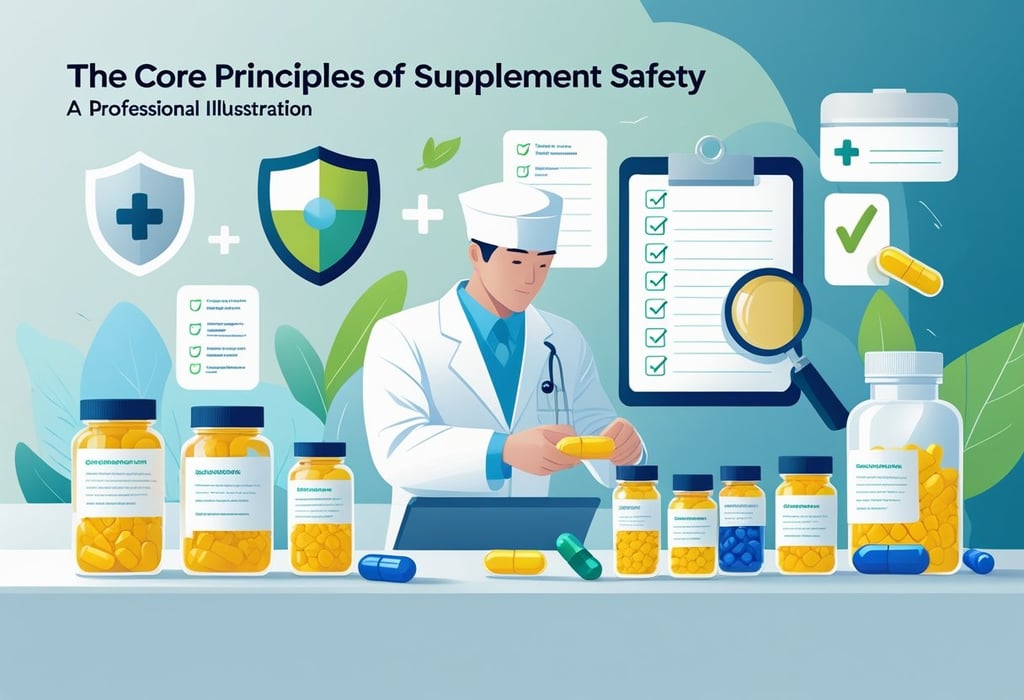
Core Principles of Supplement Safety
You need clear rules to choose supplements safely: know what a product contains, how it might interact with your health or medicines, and how to interpret the label. Focus on ingredient identity, evidence for the claim, dosing, and documented risks.
Understanding Dietary Supplements
Dietary supplements include vitamins, minerals, herbs, amino acids, probiotics, and other dietary ingredients in forms like tablets, capsules, gummies, or powders. Regulators treat them differently than prescription drugs; manufacturers must ensure safety but do not need FDA pre-approval for most products.
Pay attention to specific nutrients you need. For example, vitamin D is commonly deficient and may require measured dosing, while excess vitamin A or iron can cause toxicity. You should base use on documented deficiency, clinical guidance, or proven benefit for your condition.
Evaluate evidence for an ingredient. Botanical or herbal supplements often rely on traditional use or limited trials. Look for high-quality studies, standardization of botanical extracts, and third-party testing to confirm identity and purity.
Identifying Common Supplement Types
Vitamins and minerals: These include vitamin D, calcium, magnesium, iron, and multivitamins. You should match doses to recommended dietary allowances or medical advice. Avoid megadoses of iron or fat-soluble vitamins (A, D, E, K) unless supervised.
Herbal supplements and botanicals: Examples include echinacea, ginkgo, and St. John’s wort. These vary in active compounds and potency. Choose products that list the botanical name, extract ratio, and standardized marker compounds.
Amino acids and probiotics: Amino acids (like leucine) target muscle or metabolism, while probiotics list strains and colony-forming units (CFU). Confirm strain-specific evidence and storage requirements, since potency can decline over time.
Assessing Supplement Labels
Start with the Supplement Facts panel. It must list serving size, active ingredients, amount per serving, and % Daily Value for vitamins/minerals. Check the “other ingredients” list for fillers, allergens, or added sugars.
Evaluate health claims and labeling language. Structure/function claims (e.g., “supports immune health”) are common; they do not equal proven treatment. Legitimate labels include a required statement that the FDA has not evaluated the claim when applicable.
Look for verification seals from third-party labs (USP, NSF, ConsumerLab). These indicate testing for identity, potency, and contaminants. Also note expiration or “best by” dates and storage instructions to maintain efficacy.
Recognizing Health Risks and Adverse Events
Supplements can cause adverse events ranging from mild GI upset to serious organ damage or interactions with drugs. For example, St. John’s wort can reduce effectiveness of certain medications; excess iron can cause toxicity; high-dose vitamin D can raise calcium to dangerous levels.
Report and monitor side effects. If you experience new symptoms after starting a supplement, stop use and consult your healthcare provider. Keep a list of all supplements and prescription medicines to assess interactions.
Seek professional guidance for vulnerable groups: pregnant or breastfeeding people, children, older adults, and those with chronic illness or on anticoagulants. These groups face higher risk from contaminants, incorrect dosing, or harmful interactions.
Regulation, Quality, and Responsible Use
You should know how supplements are regulated, how to judge product quality, and practical steps to use them safely. Focus on official oversight, third-party testing, clear label checks, and checking interactions with medications.
Government Oversight and Consumer Resources
The FDA enforces safety for marketed dietary supplements but does not pre-approve most products before sale. The Dietary Supplement Health and Education Act (DSHEA) defines supplements and requires manufacturers to ensure safety and truthful labeling; manufacturers must notify FDA about most new dietary ingredients before marketing.
You can use official resources for reliable information. Check the FDA’s “Questions and Answers on Dietary Supplements,” the NIH Office of Dietary Supplements for ingredient data and fact sheets, and NCCIH (National Center for Complementary and Integrative Health) for evidence summaries. For reports of adverse events or tainted products, use FDA’s “Report a Problem with Dietary Supplements” portal and Operation Supplement Safety for military-related concerns.
Evaluating Supplement Quality and Third-Party Certification
Look for evidence of current good manufacturing practices (cGMPs) on labels or company websites; cGMPs reduce contamination and ensure consistent dose. Prioritize brands that share third-party test reports or certificates of analysis (CoA).
Trust these certification marks when present: U.S. Pharmacopeia (USP), NSF International, and ConsumerLab or similar independent labs. These organizations test for potency, contaminants (heavy metals, microbes), and accurate ingredient lists. If a product lacks a seal, ask the manufacturer for a CoA showing batch testing. Avoid products with vague proprietary blends, unsupported potency claims, or inconsistent online reviews.
Safe Supplement Selection and Usage Strategies
Start by defining the purpose: treat a deficiency (confirmed by lab tests), support a diagnosed condition, or improve diet quality. Use dose ranges backed by NIH or PubMed-reviewed clinical studies rather than celebrity recommendations.
Read labels for active ingredient amount, serving size, and other ingredients (fillers, allergens). Check the Dietary Supplement Ingredient Directory or NIH fact sheets for typical dosing and safety. Keep records: purchase source, lot number, and expiration date. If you plan long-term use, schedule periodic lab monitoring (e.g., vitamin D, iron, or thyroid-related tests) with your clinician to detect excesses or interactions.
Navigating Supplement and Medication Interactions
Supplements can seriously affect prescription drugs. Common interactions include vitamin K reducing warfarin effectiveness and St. John’s wort inducing enzymes that lower levels of many medications. Always tell your prescriber and pharmacist every supplement, herb, and botanical you take.
Use evidence-based tools: PubMed/MedlinePlus searches, NIH or NCCIH interaction summaries, and pharmacist-run interaction checkers. When starting or stopping a supplement, recheck medication blood levels or clinical response when applicable. If a supplement is taken for a medical condition, coordinate changes with the prescriber to avoid abrupt therapeutic loss or toxicity.



The Healthyish Protocol
Stay connected and follow us on social media for the latest updates!
Express your ideas or propose a topic.
© 2024. All rights reserved.