Why Strength Training Matters:
Essential Benefits for Long-Term Health and Fitness
MOVEMENT AND RECOVERY
1/18/20265 min read
Why Strength Training Matters: Essential Benefits for Long-Term Health and Fitness
Strength training goes beyond building muscle or improving appearance. It fundamentally changes how your body functions, affecting everything from bone density and metabolic health to mental clarity and chronic disease prevention. Research consistently shows that regular resistance training delivers measurable improvements in physical capacity, hormonal balance, and overall longevity.
Strength training is essential for maintaining functional independence, reducing injury risk, and supporting long-term health regardless of your age or fitness level. Whether you're lifting weights, using resistance bands, or performing bodyweight exercises, the practice triggers adaptations that protect your body against age-related decline. These benefits extend far beyond the gym, influencing your daily activities and quality of life.
Understanding why strength training matters helps you make informed decisions about your health. The science behind resistance training reveals specific mechanisms that improve your cardiovascular system, enhance cognitive function, and regulate blood sugar levels. These effects begin immediately after your workout and accumulate over time with consistent practice.
Key Takeaways
Strength training improves multiple health markers including bone density, metabolism, and disease prevention
Regular resistance exercise maintains functional capacity and reduces fall and injury risk at any age
The benefits of strength training extend beyond muscle growth to include mental health and daily performance improvements
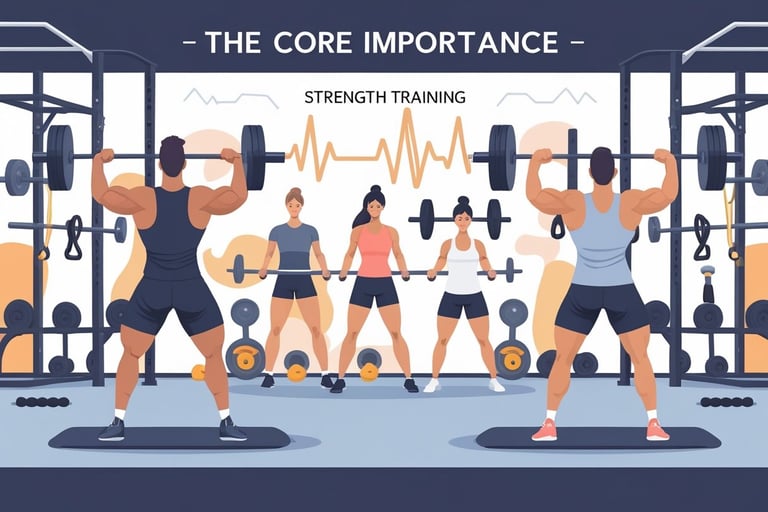
The Core Importance of Strength Training
Strength training provides a foundation for physical health through structured resistance exercises that challenge your muscles to adapt and grow stronger. This practice delivers metabolic improvements, skeletal reinforcement, and functional capacity that extends well beyond visible muscle development.
What Is Strength Training?
Strength training, also called resistance training or weight training, involves exercises designed to improve your physical strength by forcing your muscles to work against external resistance. You can use free weights, resistance bands, machines, or your own bodyweight to create this resistance.
The practice encompasses several exercise types. Traditional weightlifting involves barbells and dumbbells, while bodyweight exercises include push-ups, pull-ups, and squats. Isometric exercises require you to hold positions under tension, like planks. Plyometric movements incorporate explosive actions such as jump squats and box jumps.
Each method challenges your muscular system differently, but all share the common goal of forcing your muscles to adapt to increasing demands. Your training program can emphasize different outcomes depending on how you manipulate variables like weight, repetitions, sets, and rest periods.
Benefits Beyond Muscle Growth
Strength training delivers significant health improvements that extend far beyond aesthetic changes. Your metabolism increases because muscle tissue burns more calories than fat tissue, even when you're at rest.
Your bone density improves through regular resistance training, which reduces fracture risk and combats age-related bone loss. You'll experience better joint stability and increased flexibility, which decreases your likelihood of falls and injuries.
Mental health benefits include reduced anxiety and depression symptoms, improved cognitive function, and enhanced self-confidence. Your cardiovascular health improves through better blood pressure management and enhanced insulin sensitivity.
Functional benefits affect your daily life directly. You'll find everyday tasks like carrying groceries, climbing stairs, or playing with children become easier as your strength improves.
Muscular Adaptations and Hypertrophy
Your muscles respond to resistance training through specific adaptations at the cellular and structural levels. Muscular hypertrophy refers to the increase in muscle fiber size that occurs when you consistently challenge your muscles beyond their current capacity.
Key adaptations include:
Increased protein synthesis within muscle cells
Enhanced neuromuscular coordination and motor unit recruitment
Greater energy storage capacity in muscle tissue
Improved blood flow and nutrient delivery to working muscles
You can control muscle size increases by adjusting your training variables. Low-volume, high-intensity programs improve force production with minimal size gains, which benefits athletes in weight-class sports or endurance disciplines where relative strength matters. Higher-volume programs with moderate intensity typically maximize muscle growth for those seeking to build muscle mass.
The rate and extent of these adaptations depend on your training consistency, nutrition, recovery practices, and genetic factors.
Health and Performance Benefits
Strength training delivers measurable improvements across multiple body systems, from metabolic function and bone density to cardiovascular health and cognitive performance. These adaptations occur in both athletic and general populations, making resistance exercise a foundational practice for long-term wellness.
Metabolic and Weight Management Effects
Strength training increases lean muscle mass, which directly elevates your resting metabolic rate. More muscle tissue requires more energy to maintain, meaning you burn additional calories even when not exercising.
Regular resistance training helps reduce abdominal fat and visceral fat, the types of fat most strongly linked to metabolic disease. Your body composition shifts favorably as you build muscle and decrease fat stores simultaneously.
Insulin sensitivity improves significantly with consistent strength work. Your muscles become more efficient at absorbing glucose from your bloodstream, which supports better blood sugar management throughout the day. This adaptation occurs within weeks of starting a program and continues to strengthen with ongoing training.
The metabolic benefits extend beyond the workout itself. Your body continues burning calories at an elevated rate for hours after each session as it repairs muscle tissue and replenishes energy stores.
Bone Density and Joint Health
Weight-bearing strength exercises stimulate bone formation and slow bone loss. The mechanical stress you place on bones during resistance training signals your body to increase bone density, particularly in areas most vulnerable to osteoporosis.
Your joints become more stable as the muscles, tendons, and ligaments surrounding them grow stronger. This increased stability reduces your risk of injury during daily activities and other forms of exercise.
Flexibility often improves when you perform strength exercises through full ranges of motion. Contrary to outdated beliefs about resistance training making you stiff, proper technique actually enhances joint mobility and functional movement patterns.
Heart, Blood Sugar, and Chronic Disease
Cardiovascular health improves through regular strength training, even without traditional cardio exercise. Studies show consistent resistance work can lower blood pressure by several points in both systolic and diastolic readings.
Your heart becomes more efficient at pumping blood, and your blood vessels function better. These adaptations reduce strain on your cardiovascular system during both exercise and rest.
Strength training serves as a powerful tool for blood sugar management. The glucose uptake that occurs during and after resistance exercise helps maintain stable blood sugar levels, which is particularly valuable if you have prediabetes or diabetes.
Chronic disease risk drops across multiple conditions. Regular strength work decreases your likelihood of developing metabolic syndrome, type 2 diabetes, and certain cardiovascular diseases.
Mental Health and Cognitive Benefits
Your mental health receives substantial benefits from strength training. Research demonstrates that regular resistance exercise reduces symptoms of anxiety and depression, with effects comparable to other evidence-based treatments.
Self-esteem and body image typically improve as you gain strength and see physical changes. The concrete progress you make—lifting heavier weights or completing more repetitions—provides tangible evidence of your capabilities.
Brain health and memory function benefit from resistance training. Your brain receives increased blood flow during strength sessions, and the practice stimulates the release of growth factors that support neuron health and cognitive function.
Endorphins released during strength workouts improve your mood and create a sense of well-being. These neurochemical changes can last for hours after you finish training, contributing to better quality of life and emotional regulation.






The Healthyish Protocol
Stay connected and follow us on social media for the latest updates!
Express your ideas or propose a topic.
© 2024. All rights reserved.