Bread Is Not Your Enemy
A Confident Guide to Healthier, Balanced Eating
NUTRITION
3/14/20264 min read
Bread Is Not Your Enemy: A Confident Guide to Healthier, Balanced Eating
You don’t have to ditch bread to eat well or lose weight. Many breads—especially higher-fiber, whole-grain options—fit into a healthy eating pattern and can give you energy, fiber, and nutrients without wrecking your goals. Choosing the right kinds and portions matters more than cutting bread out entirely.
This article will show how simple swaps and smart portions make bread work for you. Expect clear tips on picking better loaves, balancing sandwiches and meals, and spotting when bread or its toppings add extra calories.
Key Takeaways
Whole-grain and higher-fiber breads provide important nutrients and steady energy.
Portion size and what you pair with bread determine its impact on your health.
Simple swaps and mindful choices let you enjoy bread while supporting your goals.
Why Bread Is Not Your Enemy
Bread can fit into most healthy eating patterns. It provides energy, fiber, and nutrients when you pick whole-grain or sourdough options and watch portions.
Debunking The Weight Gain Myth
You don’t gain weight from bread alone. Weight change comes from eating more calories than you burn. A slice of whole-grain bread typically has about 70–120 calories, so portion size matters more than the food label.
Highly processed breads with added sugars and fats can raise calorie intake quickly. Choose breads with whole grains and minimal added ingredients to limit extra calories. Pair slices with protein or vegetables to make meals more filling and reduce snacking later.
Studies show people who eat whole-grain bread tend to have similar or lower body weights than those who avoid bread. Focus on your total daily calories, meal balance, and activity—not demonizing a single food.
Bread’s Role In A Balanced Diet
Bread can supply fiber, B vitamins, iron, and energy when you choose better options. Whole-grain and seeded loaves give more fiber and micronutrients than white bread. Fiber supports digestion and helps you feel full.
Use bread as a vehicle for protein and vegetables. For example, a sandwich with grilled chicken, greens, and avocado makes a balanced meal. Watch toppings like butter and sugary spreads; they add calories without much nutrition.
If you have celiac disease or a diagnosed gluten sensitivity, avoid wheat-based bread. Otherwise, bread can fit into a healthy diet by helping you meet grain and fiber recommendations.
Carbohydrates: Energy And Complex Nutrition
Carbohydrates in bread fuel your brain and muscles. Complex carbohydrates from whole grains break down more slowly than simple carbs, giving steadier blood sugar and longer-lasting energy.
Look for labels that list “whole wheat” or “whole grain” first. Ingredients such as whole oats, barley, and seeds increase fiber and micronutrient content. Sourdough fermentation can also make minerals more available and may be easier to digest for some people.
If you want to compare options quickly:
Whole-grain slice: higher fiber, more vitamins, 70–120 kcal.
White bread slice: lower fiber, fewer nutrients, similar calories. Choose complex carbs most of the time, and balance portions with protein and healthy fats to control hunger and support energy for your day.
Bread Choices, Nutrition, And Health
Pick breads that give you fiber, protein, and real whole grains. Look for labels that list whole wheat or whole grain first, and check fiber and ingredient lists for seeds or intact grains.
Whole Grain And High-Fiber Options
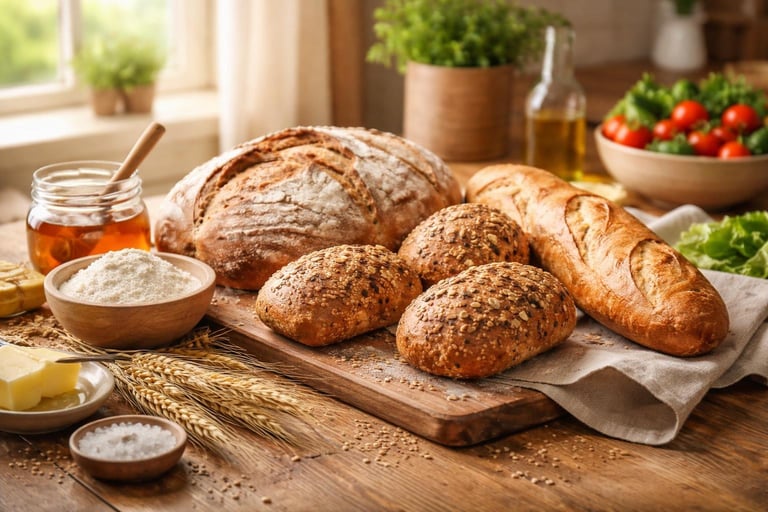
Choose breads with whole grains like whole wheat, rye, barley, or sprouted grain as the first ingredient. These provide more fiber and micronutrients than refined white flour. A country grain loaf or any bread labeled "100% whole grain" usually has intact kernels or cracked grain pieces that slow digestion and steady blood sugar.
Aim for at least 3–5 grams of fiber per slice to call it high-fiber. Look for added seeds (pumpkin, flax, sunflower) or oats on the label; they boost fiber and offer healthy fats. If you bake, try mixing whole grain flours with a bit of white flour to keep texture while raising fiber.
Bread, Gluten, And Sensitivities
If you have celiac disease, you must avoid gluten completely; that means no wheat, rye, or barley. For diagnosed gluten sensitivity, you may feel better on low-gluten or gluten-free breads made from rice, buckwheat, or certified gluten-free oats. A wheat allergy is different: it triggers immune reactions and also requires full avoidance of wheat-containing bread.
Check labels carefully: "wheat-free" is not the same as "gluten-free." Cross-contact can occur in bakeries. If you suspect a sensitivity, get tested or try a medically guided elimination before changing your diet long-term.
Fiber, Protein, And Nutrient Profile
Bread can supply fiber, plant protein, B vitamins, iron, and magnesium when made from whole grains. Typical whole grain breads give 3–5 g fiber and 3–7 g protein per slice, varying by recipe and added seeds. Sprouted whole grain bread often has slightly higher protein availability and may be easier to digest.
Read the nutrition panel for sodium and added sugars. Some commercial loaves add sugar or malt to improve flavor; keep added sugar low. If you want more protein, choose breads with seeds, legume flour, or higher whole grain content. Pairing slices with protein-rich toppings will boost the meal’s overall protein.
Pairing Bread With Nutritious Foods
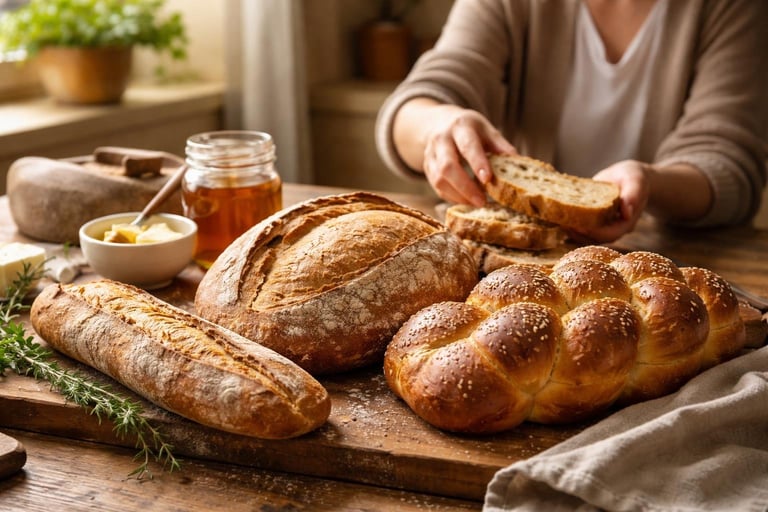
Balance bread with protein, healthy fats, and vegetables. Top your slice with nut and seed butters, hummus, canned salmon, or eggs to add protein and slow carbohydrate absorption. Add leafy greens, sliced tomato, or avocado for fiber, vitamins, and minerals.
For sandwiches, choose whole grain or high-fiber rolls and fill them with lean proteins and plenty of vegetables. If you enjoy crusty or specialty loaves like cobs bread, use smaller portions and bulk up the meal with salad or soup to keep calories and carbs in check.


The Healthyish Protocol
Stay connected and follow us on social media for the latest updates!
Express your ideas or propose a topic.
© 2024. All rights reserved.