Protein, Carbs, and Fats Explained Simply
A Clear Guide to What They Do and How to Balance Them
NUTRITION
3/13/20264 min read
Protein, Carbs, and Fats Explained Simply: A Clear Guide to What They Do and How to Balance Them
You use protein, carbs, and fats every day — in your meals, energy, and body repair. Protein builds and repairs tissue, carbs give you quick energy, and fats help your brain and hormones work properly. Knowing each one makes it easier to pick foods that match your goals.
This short guide breaks down what each macronutrient does, where to find them, and which choices give you the best nutrition. You’ll leave knowing how to balance your plate so meals fuel your day and support your health.
Key Takeaways
Learn what each macronutrient does for your body.
Choose foods that match your energy and recovery needs.
Focus on higher-quality sources for better nutrition.
Protein, Carbs, and Fats Explained Simply
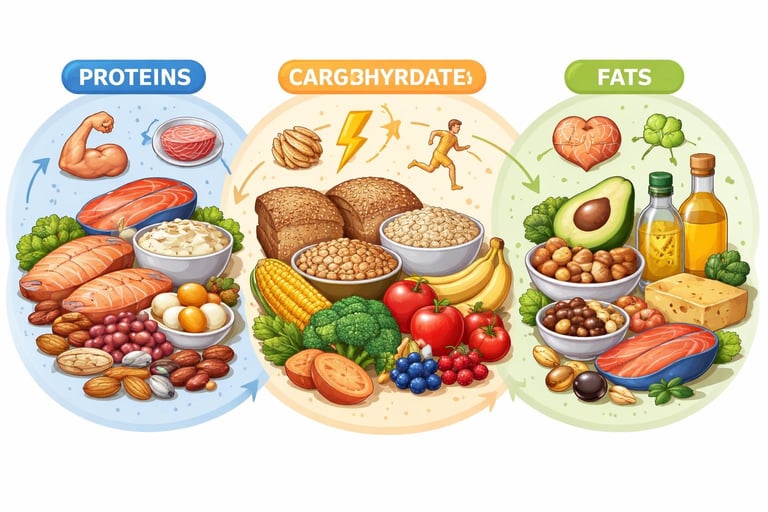
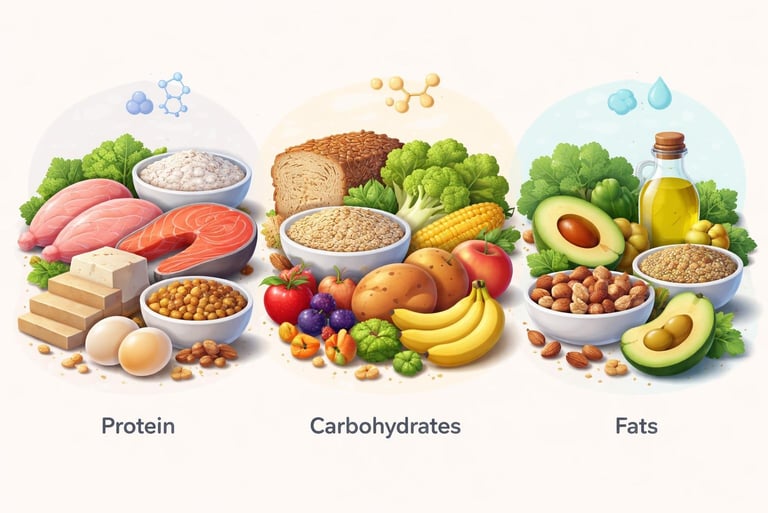
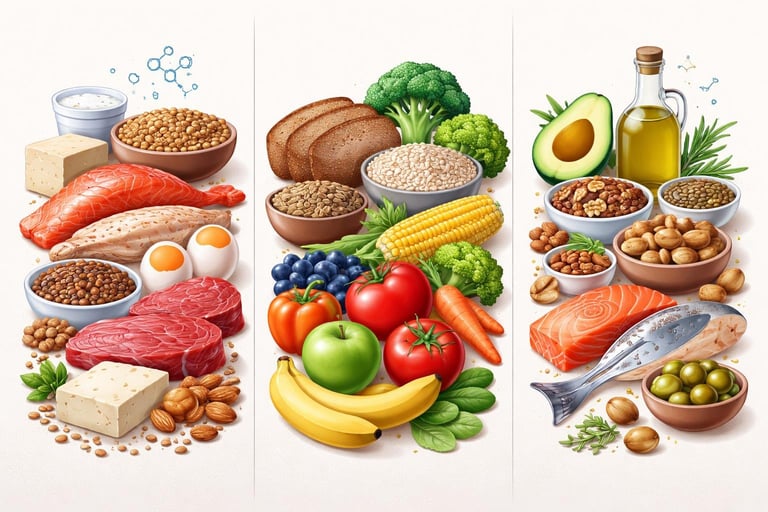
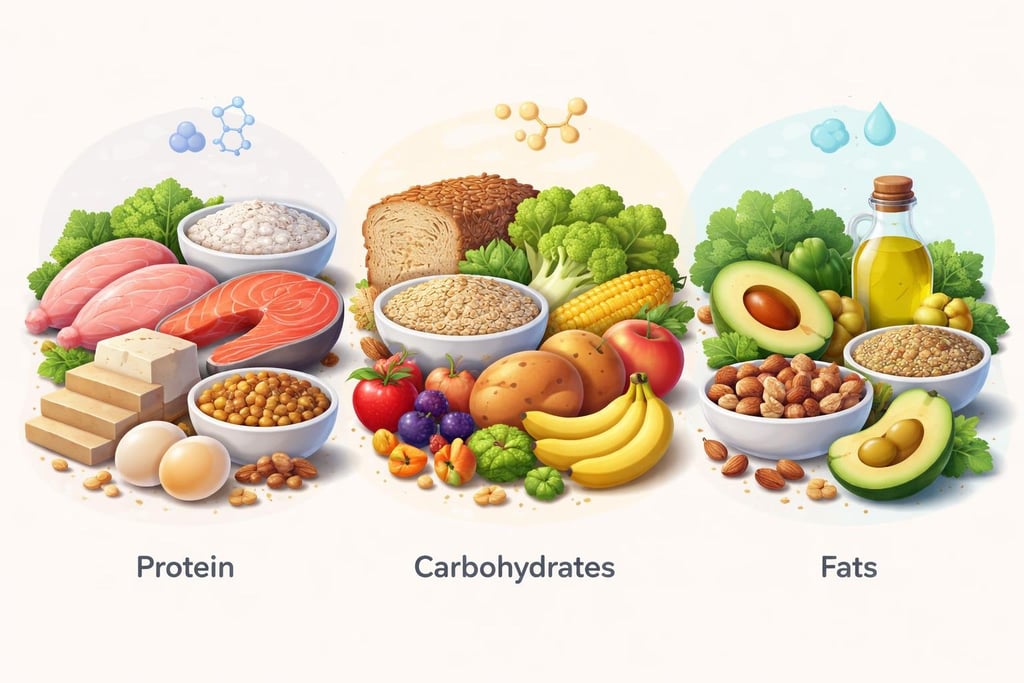
Your body needs three main macronutrients for energy, growth, and daily function: protein builds and repairs tissues, carbohydrates give quick energy, and fats support long-term energy and cell health.
Protein Basics and Functions
Protein supplies amino acids, the building blocks your body uses to repair muscle, make enzymes, and support the immune system. Aim for lean sources like chicken, fish, beans, and low-fat dairy to get complete proteins and essential amino acids.
Each gram of protein provides 4 calories. You use protein most when you exercise, heal from injury, or grow. If you don’t eat enough, your body may break down muscle to meet needs. Practical tips: include a source of protein with each meal and after workouts to help recovery.
Protein also helps you feel full longer than carbs. That can help control appetite and support steady energy levels. Watch total calories, since excess protein can still add up.
Carbohydrates as the Body’s Energy Source
Carbohydrates are your body’s fastest fuel. Your brain and muscles prefer carbs for quick energy during daily tasks and workouts. Each gram of carbohydrate gives you 4 calories.
Choose mostly complex carbs—whole grains, vegetables, fruits, and legumes—for steady blood sugar and longer energy. Simple carbs like candy or soda give quick spikes and drops in energy. Fiber, a carb that doesn’t provide many calories, helps digestion and keeps you full.
Balance matters: match carb intake to activity. Higher activity days need more carbs for fuel; low-activity days need fewer to avoid extra calories. Read labels to track grams and calories when you monitor macronutrients.
Fats and Their Essential Roles
Fats provide 9 calories per gram, so they are the most calorie-dense macronutrient. You need fats for cell membranes, hormone production, and absorbing fat-soluble vitamins A, D, E, and K. Include healthy fats like olive oil, avocados, nuts, and fatty fish.
There are different fats: unsaturated (healthy), saturated (limit), and trans fats (avoid). Unsaturated fats support heart health and inflammation control. Saturated fats raise LDL cholesterol when eaten in excess; keep them moderate.
Fats slow digestion, which helps steady your blood sugar and keeps you satisfied after meals. Because fats pack more calories, watch portion sizes to meet your energy needs without overshooting your daily calories.
Sources and Quality of Macronutrients
Choose foods that give you essential building blocks like amino acids and steady energy. Focus on whole foods that supply vitamins, minerals, fiber, and healthy fats while avoiding high amounts of added sugars, highly processed grains, and trans fats.
High-Quality Protein Sources
Pick proteins that supply a full set of essential amino acids when you need them for muscle repair, enzymes, and hormones. Animal proteins — chicken, fish, eggs, and dairy — typically provide complete amino acid profiles. Fatty fish like salmon or mackerel also give omega-3 fats.
If you prefer plants, combine foods such as beans, lentils, tofu, quinoa, and oats across the day to cover all essential amino acids. Nuts and seeds add protein plus healthy fats and fiber.
Use protein powder when you need quick, measured protein after workouts or on busy days. Watch portions: about 20–30 grams of high-quality protein per meal helps stimulate muscle maintenance for most adults.
Healthy Carbohydrate Choices
Choose carbohydrates that provide fiber, vitamins, and steady glucose rather than quick sugar spikes. Whole grains like brown rice, quinoa, and oats release energy slowly and support digestion.
Starchy vegetables such as sweet potatoes and legumes (beans, lentils) give carbs plus fiber and protein. Non-starchy vegetables and most fruits add micronutrients with fewer calories.
Limit refined grains and added sugars found in many packaged foods. Fiber-rich carbs help you feel full longer and keep blood sugar steadier, which supports energy and appetite control.
Types of Dietary Fats
Favor unsaturated fats for heart and brain health. Olive oil and avocado supply monounsaturated fats. Nuts, seeds, and fatty fish provide polyunsaturated fats, including omega-3s in salmon, walnuts, and flaxseed.
Saturated fats come mainly from animal products and some tropical oils; keep these limited rather than eliminated. Avoid trans fats found in some baked goods and fried fast foods because they raise heart risk.
Balance fat intake so it supports your goals: healthy fats improve nutrient absorption and satiety, while portion control keeps calories in check.

The Healthyish Protocol
Stay connected and follow us on social media for the latest updates!
Express your ideas or propose a topic.
© 2024. All rights reserved.