What Circadian Rhythm Controls
Key Functions, Health Effects, and Regulation Strategies
FOUNDATIONS
2/15/20265 min read
What Circadian Rhythm Controls: Key Functions, Health Effects, and Regulation Strategies
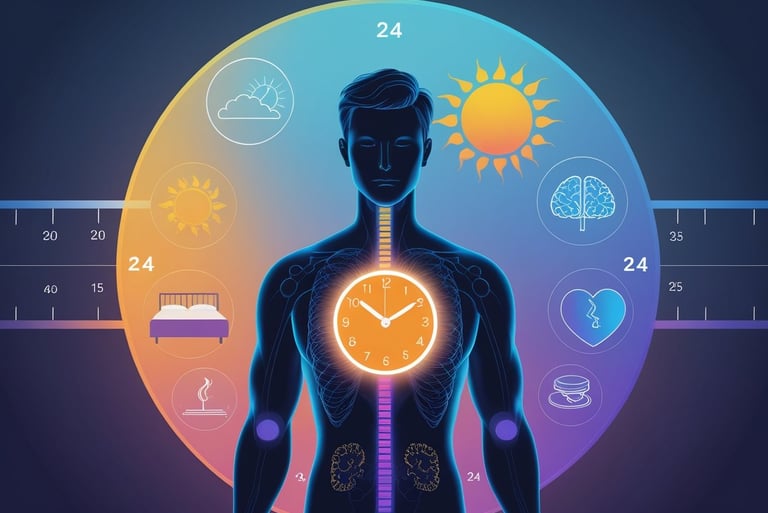
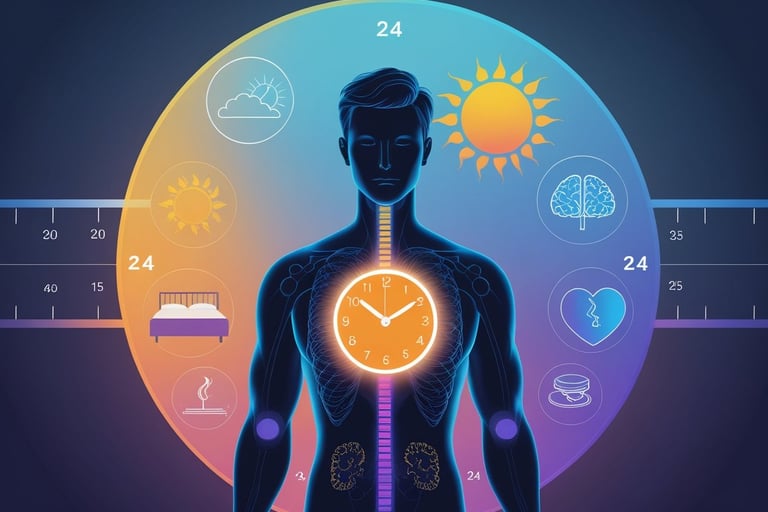
You have an internal 24-hour clock that times far more than sleep. It sets when you feel awake or sleepy, controls body temperature, hormone release, digestion, and even blood pressure. Understanding your circadian rhythm helps you align daily habits so your body works better.
Light and meal timing reset that clock, while genes and a brain center in the hypothalamus keep it running. When that timing gets off, you can feel tired, eat poorly, or have trouble with mood and health, so small daily changes can make a big difference.
Key Takeaways
Your body's daily clock drives sleep, hormones, temperature, and digestion.
Light and timing of meals strongly shape how that clock runs.
Disrupting the clock can harm energy, mood, and overall health.
Core Functions Controlled by Circadian Rhythm
Your internal clock times when you feel asleep or alert, when hormones rise and fall, how warm your body runs, and when your appetite and digestion work best. Light signals and clock genes keep these rhythms regular so your body matches daily activity to day and night.
Regulation of the Sleep-Wake Cycle
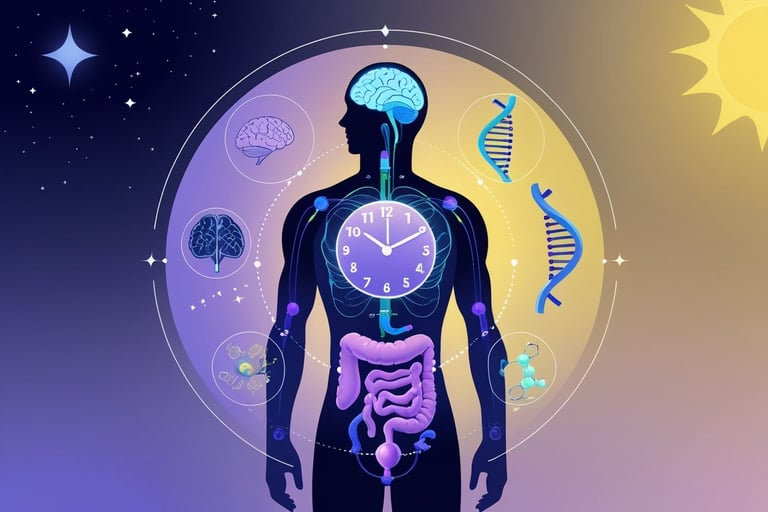
The suprachiasmatic nucleus (SCN) in your hypothalamus acts as the master clock that sets your sleep-wake rhythm. Photoreceptors in your eyes sense light and send signals to the SCN. That signal adjusts clock gene expression (like PER and CRY), which creates a roughly 24-hour cycle through a negative feedback loop.
Melatonin from your pineal gland rises in dim light to promote sleepiness and falls with morning light to promote wakefulness. Cortisol follows a separate daily pattern, peaking near wake time to boost alertness. Light exposure at night delays your sleep phase; morning light advances it. Irregular light, shift work, or jet lag can desynchronize the SCN from peripheral clocks and disturb sleep patterns.
Hormone Release and Biological Clocks
Your circadian system times hormone secretion so hormones act when you need them most. The SCN coordinates timing signals to glands and peripheral tissues to phase hormone release across the day.
Melatonin signals night and helps sleep onset, while cortisol peaks in the early morning to raise blood sugar and support activity. Insulin sensitivity varies across the day; clock genes in pancreas cells influence insulin release after meals. Disrupted timing can alter cortisol rhythms and hormone balance, raising risk for metabolic and mood problems. Peripheral clocks in organs read cues from the SCN and from feeding times to fine-tune hormone secretion.
Body Temperature and Metabolism
Body temperature follows a clear daily pattern set by your body clock. It usually falls during the night to support sleep and rises before waking to increase alertness. The SCN coordinates this rhythm and signals through autonomic pathways and hormones to adjust heat production and blood flow.
Metabolic processes such as glucose tolerance and lipid handling show time-of-day variation. Clock genes in liver and muscle cells change gene expression across the day to control enzyme activity. When your feeding schedule conflicts with your circadian timing, insulin sensitivity and metabolic efficiency drop. Keeping consistent sleep and meal times helps sync body temperature rhythms and metabolic function.
Appetite, Digestion, and Liver Function
Your appetite and digestive system follow circadian cues so digestion works best at certain times. Hunger hormones like ghrelin and satiety signals shift across the day, guiding when you feel hungry and full. Meal timing acts as a strong zeitgeber for peripheral clocks in the gut, pancreas, and liver.
The liver uses clock gene signals to time glucose production, bile release, and detox pathways. Pancreatic insulin secretion aligns with daily patterns to manage blood sugar after meals. Eating late at night can misalign peripheral clocks from the SCN, reducing insulin sensitivity and impairing liver metabolism. To support digestion and liver health, align meal timing with daylight and your sleep-wake phase.
Impacts of Circadian Rhythm Disruption and Disorders
Circadian disruption affects how well you sleep, how your metabolism works, and how your heart and blood vessels respond to stress. It can come from genetic disorders, shift work, jet lag, or habits like late-night light exposure and irregular sleep schedules.
Circadian Rhythm Disorders and Sleep Quality
When your circadian clock is off, you face more than just poor sleep. Conditions like delayed sleep-wake phase disorder, advanced sleep-wake phase disorder, non-24-hour sleep-wake rhythm disorder, and irregular sleep-wake rhythm disorder directly shift your sleep window. That leads to trouble falling asleep, waking too early, or fragmented sleep.
You may feel daytime sleepiness, reduced concentration, and greater risk of accidents. Chronic circadian misalignment worsens insomnia and sleep deprivation. Sleep medicine often treats these with timed light exposure, melatonin at specific clock times, and fixed sleep schedules.
If you nap irregularly or your sleep schedule varies by several hours between workdays and free days, your sleep quality stays poor. Consistent sleep timing helps recalibrate the circadian timing system and improve restorative deep and REM sleep.
Metabolic and Cardiovascular Health Consequences
Circadian disruption alters hormone rhythms that control glucose, lipids, and appetite. That raises your risk for metabolic syndrome, obesity, and type 2 diabetes. Studies show night eating or eating at biologically inappropriate times impairs glucose tolerance and raises triglycerides.
Your blood pressure and heart rate normally follow daily patterns set by the circadian rhythm. When those patterns break down, you face higher inflammation and oxidative stress. Over months to years, this increases the chance of cardiovascular disease and adverse events.
Managing timing of meals, regular sleep, and light exposure helps reduce metabolic strain. Addressing circadian misalignment early can lower long-term risk for metabolic disorders and obesity.
Effects of Shift Work, Jet Lag, and Poor Sleep Habits
Shift work and jet lag create repeated circadian misalignment for you. Working nights or rotating shifts forces your internal clock to oppose your sleep-wake behavior. That can produce shift work disorder with chronic sleep loss, impaired performance, and mood problems.
Travel across time zones causes jet lag disorder until your circadian timing system re-entrains to the new light-dark cycle. You’ll feel daytime sleepiness, poor sleep quality, and cognitive slowing. Poor sleep habits—late screens, inconsistent bedtimes, and irregular napping—make re-entrainment slower and symptoms worse.
Practical steps include scheduled light exposure, strategic naps, and gradual shift in sleep timing before travel or work rotation. These actions speed circadian realignment and reduce risks tied to chronic sleep loss and circadian disruption.

The Healthyish Protocol
Stay connected and follow us on social media for the latest updates!
Express your ideas or propose a topic.
© 2024. All rights reserved.